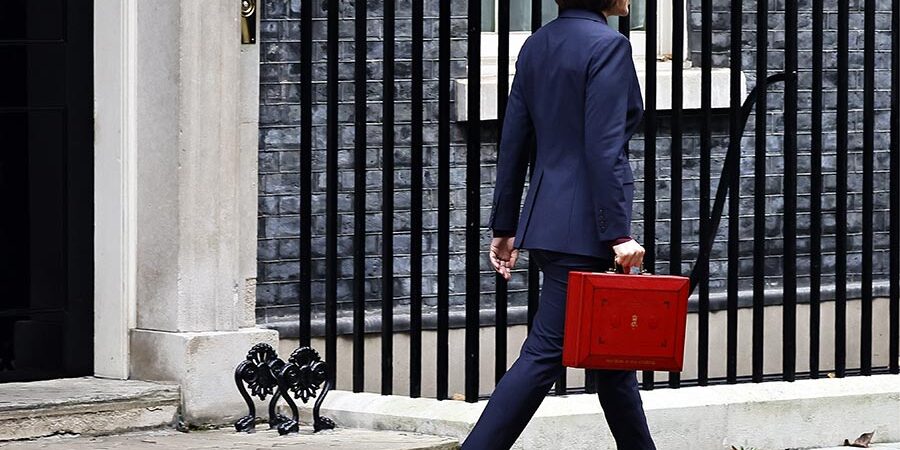
A brief overview of some of the main points from a financial planning perspective from the Budget.
Perhaps the most newsworthy point was the accidental release of the OBR report prior to the Chancellor announcing the Budget in the House of Commons.
Other notable headlines are that things that were expected didn’t happen, such as an increase to Income Tax rates. There are, however, a number of tax raising measures which mean obtaining independent financial advice becomes more important to ensure you can shelter assets against tax.
The personal allowance, higher rate and additional rate thresholds are frozen until 2030-31. These are £12,570, £50,570 and £125,140 respectively. The rates will have been frozen for a decade. The Scottish Budget in January 2026 will confirm the thresholds for Scotland.
From April 2027 the Income Tax ordering rules are changing so that the personal allowance must be set against earned income and pensions before dividend income, savings income and property income.
The secondary threshold for National Insurance Contributions will also be frozen at £5,000 until 2030-31. This is the threshold above which employers must collect and pay National Insurance on an employee’s earnings. There were no increases to NI rates.
The rate of tax on dividends, savings income and property rental income will rise by two percentage points from April 2026 dividends taxed at the ordinary rate and upper rate will increase from 8.75% to 10.75% and for higher rate 33.75% to 35.75%.
There are no changes to the additional rate which remains at 39.35%. The dividend allowance is unchanged at £500 pa.
From April 2027 tax on savings income (e.g. deposit interest) will increase by two percentage points in each tax band. Savings income falling in the basic, higher and additional rate bands will therefore be taxed at 22%, 42% and 47% respectively. There are no changes to the Personal Savings Allowance. This is £1,000 for basic rate tax payers and £500 for higher rate tax payers. Additional rate tax payers do not receive a Personal Savings Allowance.
The increases will also apply to chargeable event gains on investment bonds which are taxed as savings income.
The same increase also applies to property rental income. From April 2027, the rates of tax on property income will be 22%, 42% and 47%, depending on whether such income falls in the basic, higher or additional rate bands.
These increases emphasise why sheltering tax on dividends and savings in ISAs where possible (or pensions for longer term savings) is the important to help with the growth of your assets.
Other announcements affecting a smaller number of taxpayers include investors in VCT schemes seeing upfront Income Tax relief reduced from 30% to 20% from April 2026.
The Chancellor maintained the overall annual ISA limit at £20,000, however, from April 2027, only individuals aged 65 and over will be able to save the full £20,000 into a Cash ISA.
For the under 65s, the Cash ISA limit will be capped at £12,000, with the remaining £8,000 allowance available only for investment into a Stocks and Shares ISA.
There will also be a consultation on reforming Lifetime ISAs, which is expected to be published early in 2026. The proposal is to replace Lifetime ISAs with another ISA product aimed at first time buyers.
Although it was touted that there would be changes to the pension tax free lump sum and tax relief on pension contributions, nothing happened.
However, there is a major change for those who use salary sacrifice to build pension funds.
From April 2029, the National Insurance (NI) exemption for pension contributions made by salary sacrifice will be limited to £2,000 a year. The effect of this is that both employees and employers will have to pay NI on any salary sacrificed over this amount.
The largest impact is going to be on employees who earn below the upper earnings limit (UEL) as they will have to pay NI of 8% on any amount sacrificed over £2,000. NI for employees on earnings above the UEL is 2%. Employers will have to pay NI of 15% on any salary sacrifice over the £2,000 limit.
Employees who salary sacrifice over £2,000 pa will see a reduction in their take home pay – but as employers often agree to share part of their NI saving with employees thus boosting their pension contributions. This change may result in a smaller pension pot at retirement for employees who use salary sacrifice.
If you use or wish to use salary sacrifice to boost your pension fund, you have a window of just over 3 years to maximise this before the cap comes into place. Salary sacrifice is not suitable for everyone as your borrowing potential for mortgages may be lower as the amount you can borrow level is partly determined by a multiple of salary. If you have death in service life cover, then it is likely that the cover would be reduced as this is often a multiple of salary. Therefore it is important for both an employee and employer to seek independent financial advice when considering salary sacrifice.
The Chancellor has confirmed that any unused £1 million allowance for Business Relief and Agricultural Relief will be transferable between spouse and civil partners. This becomes effective for deaths after 6 April 2026 when the new cap on relief at 100% comes into force.
The Chancellor didn’t bring in a full-blown wealth tax, although she announced the introduction of new High Value Council Tax Surcharge on properties worth £2 million or more.
The surcharge, which will be introduced from April 2028, is payable by the homeowner and is in addition to any existing council tax. Properties will be valued by the Valuation Office and the surcharge applied as follows:
| Property Value | Surcharge p.a. |
| £2m – £2.5m | £2,500 |
| £2.5m – £3.5m | £3,500 |
| £3.5m – £5m | £5,000 |
| £5m+ | £7,500 |
There will be a consultation on the application of the charge for properties with complex ownership structures such as trusts and businesses.
An Electric Vehicle Excise Duty, a new mileage charge for electric and plug-in hybrid cars, is to come into effect from April 2028. Drivers will pay for their mileage alongside their existing Vehicle Excise Duty, with fully electric vehicles being charged 3p and plug in hybrids 1.5 p per mile respectively.
An Electric Vehicle Excise Duty, a new mileage charge for electric and plug-in hybrid cars, is to come into effect from April 2028. Drivers will pay for their mileage alongside their existing Vehicle Excise Duty, with fully electric vehicles being charged 3p and plug in hybrids 1.5 p per mile respectively.
The last two Budgets have increased the need for Independent Financial Advice, particularly around IHT planning with pensions coming into the scope of IHT from 6 April 2027. At Forward Plan we can help clients assess the impacts of how IHT may reduce what they leave to their loved ones and how they can look to mitigate this.
We have some excellent tools that can demonstrate how our advice can potentially save your beneficiaries thousands of pounds in IHT.
Make contacting us a resolution for 2026.
- Please be aware that the impact of taxation (and any tax reliefs) depends on individual circumstances.
- The Financial Conduct Authority does not regulate taxation and trust advice.
- Information about tax rules is based upon our current understanding and is liable to change in the future.
For more information on the range of services that we offer at Forward Plan or to book your free no obligation consultation to improve your financial health please contact us through the websiteor call us on: 01303 76 76 50